
Ryobi 40V Battery Light Codes: A Comprehensive Guide
Decoding Ryobi 40V battery lights is crucial for optimal tool performance․ The official Ryobi 40V Battery Light Codes PDF Guide provides detailed explanations,
troubleshooting, and maintenance advice to maximize battery lifespan and efficiency․
Understanding Ryobi 40V Battery Indicators
Ryobi 40V battery indicators utilize a series of LED lights to communicate crucial information about the battery’s status․ These lights aren’t simply displaying a percentage of charge; they offer insights into cell health, potential issues like overheating or overcurrent, and even whether the battery is in a “sleeping” state requiring a specific revival process․ The Ryobi 40V Battery Light Codes PDF Guide is essential for fully grasping the nuances of these indicators․

Typically, four solid green lights signify a fully charged battery, while fewer lights indicate a partial charge․ However, flashing lights, or a combination of red and green, signal more complex problems․ Understanding these patterns, as detailed in the PDF guide, allows users to proactively address issues before they lead to performance degradation or complete battery failure․ The guide clarifies that the outer lights relate to overcurrent protection, and the inner lights indicate over temperature protection, reassuring users that these aren’t necessarily faults․
The indicators are designed to be a quick diagnostic tool, but the PDF provides the in-depth knowledge needed to interpret them accurately and implement appropriate solutions․
Decoding the Light Patterns
Ryobi 40V battery light patterns are a coded language revealing the battery’s internal state․ A solid four green lights unequivocally indicate a full charge, ready for optimal tool performance․ However, deviations from this – fewer green lights, flashing lights, or a combination of red and green – demand attention and interpretation, best guided by the Ryobi 40V Battery Light Codes PDF Guide․
The PDF details how each light represents a cell group within the battery․ Therefore, fewer than four lit lights don’t just mean “low battery”; they suggest potential imbalances between the cells․ Flashing red or green lights often point to protection mechanisms activating, such as overcurrent or overtemperature protection․ The guide clarifies that these aren’t necessarily signs of a defective battery, but rather safety features in operation․
Successfully decoding these patterns requires understanding the specific meanings assigned to each combination, as meticulously outlined in the official PDF․ It empowers users to diagnose issues and implement solutions, potentially avoiding unnecessary battery replacements․
The Significance of Green Lights
Green lights on a Ryobi 40V battery are the most reassuring indicator of health and readiness․ A full complement of four solid green lights signifies a completely charged battery, capable of delivering peak performance to your Ryobi tools․ This is the ideal state, confirming the battery is primed for extended use without interruption․ However, the Ryobi 40V Battery Light Codes PDF Guide emphasizes that even the number of green lights holds crucial information․
The guide explains that each green light corresponds to a specific cell group within the battery pack․ Therefore, observing fewer than four green lights doesn’t simply mean “low power”; it suggests a potential imbalance or varying charge levels among the individual cells․ This insight is vital for proactive battery maintenance․
Understanding the nuances of green light displays, as detailed in the PDF, allows users to assess battery health accurately and address potential issues before they escalate into performance problems․ It’s a key component of maximizing battery lifespan and tool efficiency․

Interpreting Fewer Than Four Green Lights
When a Ryobi 40V battery displays fewer than four green lights, it signals a partial charge or potential cell imbalance․ The Ryobi 40V Battery Light Codes PDF Guide clarifies that each light represents the charge status of a specific cell group within the battery pack․ Consequently, three lights indicate a roughly 75% charge, two around 50%, and one suggests a critically low charge level․
However, the guide stresses that fewer lights aren’t always indicative of simple low power․ A consistently low light count, even after a full charge cycle, points towards a possible cell imbalance․ This means some cells are holding a charge effectively, while others are not, hindering overall battery performance․
The PDF recommends employing the “repeated charge cycle” method – repeatedly inserting and removing the battery from the charger – to attempt to rebalance the cells․ Ignoring this warning and continuing to use the battery can lead to reduced runtime and potentially shorten the battery’s overall lifespan․ Careful interpretation, guided by the PDF, is key․
Ryobi 40V 6Ah Battery Light Codes Explained
The Ryobi 40V 6Ah batteries utilize a four-light indicator system to display charge status, and the Ryobi 40V Battery Light Codes PDF Guide provides a detailed breakdown․ Each light corresponds to a specific cell group within the 6Ah battery pack, offering a granular view of the battery’s condition․
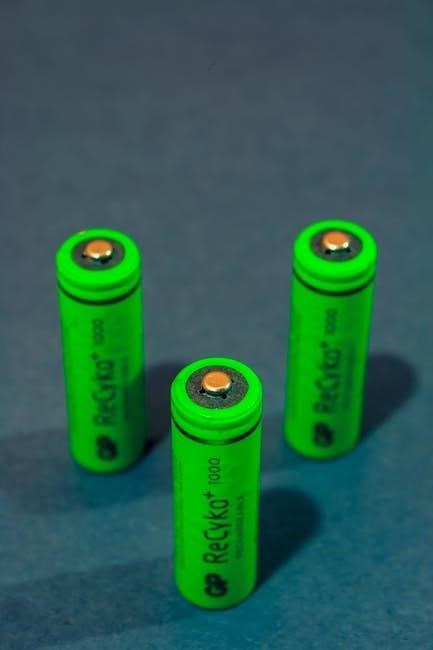
A full complement of four solid green lights signifies a 100% charge, ensuring maximum runtime for your Ryobi tools․ Conversely, fewer than four lights indicate a partial charge, with each missing light representing approximately a 25% reduction in capacity․ This allows users to quickly assess remaining power․
The PDF emphasizes that these lights aren’t merely indicators of charge level; they can also signal potential issues․ Consistent display of fewer lights, even after a complete charge, suggests possible cell imbalances․ The guide recommends utilizing the repeated charge cycle to attempt correction, and further troubleshooting if the problem persists․ Understanding these codes, as detailed in the PDF, is vital for optimal battery management․
Troubleshooting Flashing Red/Green Lights
Encountering flashing red and green lights on your Ryobi 40V battery signals a “sleeping” battery state, and the Ryobi 40V Battery Light Codes PDF Guide details the revival process․ This typically occurs when the battery has been left discharged for an extended period, preventing it from registering a charge․
The PDF outlines a specific “repeated charge cycle” to awaken the battery․ This involves repeatedly connecting and disconnecting the battery from the charger before the lights stabilize․ The goal is to deliver small, incremental charges that gradually rouse the battery’s internal monitoring system․ Patience is key, as this process can take up to 30 minutes․
The guide stresses that flashing lights don’t necessarily indicate a faulty battery․ Often, this is a recoverable condition․ However, if the repeated charge cycle fails to resolve the issue, the PDF advises consulting the troubleshooting section for further diagnostics or contacting Ryobi support․ Proper understanding, as provided in the PDF, can save a potentially functional battery from premature disposal․
Reviving a “Sleeping” Battery – The Repeated Charge Cycle
The Ryobi 40V Battery Light Codes PDF Guide meticulously details the repeated charge cycle – the primary method for reviving a “sleeping” 40V battery․ This condition arises when a battery remains deeply discharged for a prolonged duration, causing its internal circuitry to enter a low-power state․
The process, as outlined in the PDF, is deceptively simple yet requires precision․ Connect the charger to a power outlet and insert the battery․ Watch the indicator lights; just before they transition to a stable red/green flash, remove the battery․ Immediately re-insert it and repeat this sequence․ Each insertion delivers a small charge, incrementally waking the battery’s management system․
The PDF emphasizes continuing this cycle until the green light flashes consistently․ This can take considerable time, potentially up to 30 minutes․ The guide explains that this works because each brief charge bypasses the initial detection failure, slowly building enough power for the battery to register․ Following the PDF’s instructions precisely maximizes the chances of successful revival․
Step-by-Step Battery Reset Procedure
The Ryobi 40V Battery Light Codes PDF Guide provides a straightforward reset procedure for addressing certain error states, particularly those related to over-current or temperature protection․ This isn’t a full revival for deeply discharged batteries, but a quick fix for temporary glitches․
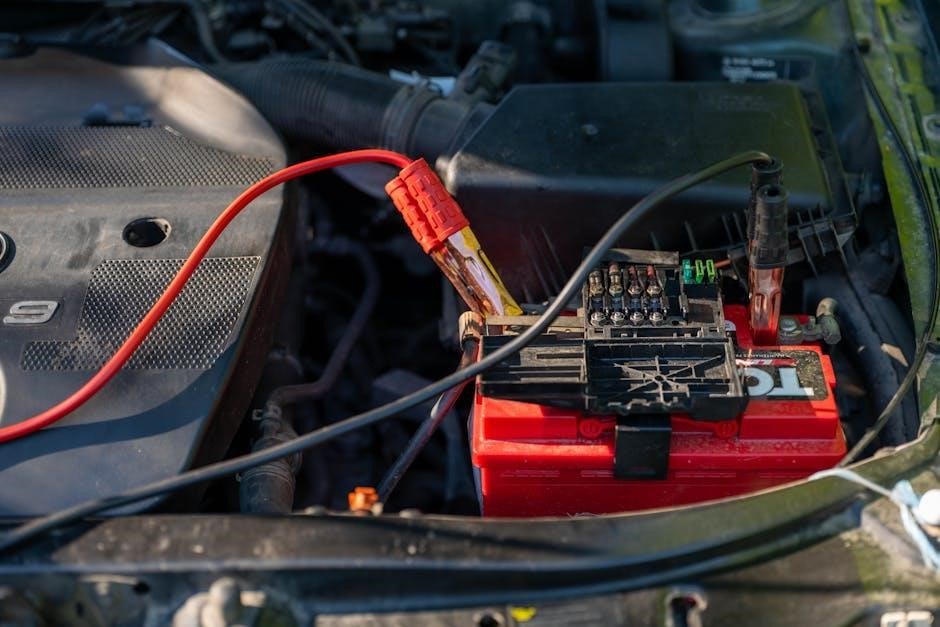
The guide instructs users to first remove the battery from the charger or tool․ Allow a brief pause – a few seconds are sufficient․ Crucially, with all indicator lights extinguished, press the battery indicator button․ This button initiates a self-check within the battery’s internal electronics․
The PDF highlights that upon releasing the button, the indicator lights should illuminate, displaying the battery’s current charge level․ If the lights return to normal, the reset was successful, and the battery is ready for use․ This process effectively clears temporary error flags․ The guide clarifies this reset doesn’t repair damaged cells, but resolves common operational errors․ Refer to the PDF for visual aids accompanying these steps․
Why the Repeated Charge Cycle Works
The Ryobi 40V Battery Light Codes PDF Guide doesn’t explicitly detail the science, but the “repeated charge cycle” – repeatedly inserting and removing the battery from the charger – is a documented workaround for “sleeping” batteries․ This method leverages the battery’s internal monitoring system․
Essentially, each brief connection to the charger delivers a small incremental charge․ Before the battery’s internal protection circuitry fully registers as “sleeping” or deeply discharged, the removal interrupts the process․ Repeating this cycle slowly builds a minimal charge level, enough to “wake up” the battery’s management system․
The PDF suggests this can take up to 30 minutes, emphasizing patience․ It’s not a rapid charging solution, but a method to overcome the initial hurdle of a deeply discharged state․ This works because the battery isn’t receiving a full charge at once, circumventing the immediate shutdown triggered by its low-voltage protection․ The guide doesn’t guarantee success, but it’s a recommended first step before considering the battery irreparable․

Over Current Protection – Outer Lights
According to the Ryobi 40V Battery Light Codes PDF Guide, the two outermost lights on the battery indicator serve as a visual cue for over current protection activation․ This protection mechanism is a safety feature designed to prevent damage to both the battery and the connected tool․
Over current situations typically arise when the tool demands more power than the battery can consistently deliver․ This often happens during demanding tasks, like pushing a lawnmower through thick grass or encountering resistance while cutting․ The battery’s internal circuitry detects this excessive draw and temporarily limits power output, illuminating the outer lights․
The guide clarifies that this isn’t a battery defect, but rather normal operation under stress․ A simple reset – removing the battery, waiting briefly, and pressing the indicator button – usually resolves the issue․ This allows the battery to resume normal operation․ Understanding this function, detailed in the PDF, prevents unnecessary returns and ensures continued tool functionality․
Over Temperature Protection – Inner Lights
The Ryobi 40V Battery Light Codes PDF Guide explicitly details that the two inner lights on the battery indicator relate to over temperature protection․ This crucial safety feature safeguards the battery from potential damage caused by excessive heat buildup during operation or charging․
Batteries generate heat, especially under heavy loads or in warm environments․ If the internal temperature exceeds safe limits, the battery’s protection circuitry activates, limiting or stopping power delivery․ The inner lights illuminate to signal this condition, preventing potential thermal runaway or reduced battery lifespan․

The guide emphasizes that seeing these lights isn’t necessarily a sign of a faulty battery․ It’s a proactive measure to protect the internal components․ Allowing the battery to cool down, and then performing a reset by removing and re-inserting it while pressing the indicator button, typically resolves the issue․ The PDF provides a clear understanding of this function, promoting informed troubleshooting and preventing premature battery replacement․

Resetting After Over Current/Temperature Warnings
The Ryobi 40V Battery Light Codes PDF Guide provides a simple, effective reset procedure following over current or over temperature warnings․ This avoids unnecessary battery returns and restores functionality in many cases․ The guide stresses a straightforward process to clear these protective alerts․
After an over current (outer lights flashing) or over temperature (inner lights flashing) warning, the guide instructs users to first remove the battery from the tool or charger․ A brief pause – even just a moment – allows the battery’s internal systems to reset․ Then, while the indicator lights are completely off, press the battery indicator button․
This action initiates a self-check․ As the lights illuminate again, they should display the accurate remaining battery level․ The PDF clarifies that this reset confirms the battery is operating correctly and ready for use․ This simple step, detailed within the guide, often resolves temporary protection triggers, ensuring continued tool operation without requiring further intervention․
Battery Indicator Button Functionality
The Ryobi 40V Battery Light Codes PDF Guide emphasizes the crucial role of the battery indicator button in assessing battery health and status․ This button isn’t merely for checking charge levels; it’s a key component in troubleshooting and resetting certain error conditions․
According to the guide, pressing the indicator button illuminates the four LED lights, displaying the remaining charge․ Each light represents approximately 25% of the battery’s capacity․ However, its functionality extends beyond simple charge indication․ The PDF details how, after experiencing an over current or over temperature warning, pressing this button – while all lights are initially off – initiates a reset sequence․
This reset allows the battery’s internal protection circuits to clear temporary faults․ The guide explicitly states that pressing the button and observing the lights return to a normal charge level indication confirms the battery has successfully reset and is safe to use․ Understanding this button’s dual purpose is vital for maximizing battery performance and lifespan, as outlined in the comprehensive PDF․
Ryobi 40V Battery Problems and Solutions
The Ryobi 40V Battery Light Codes PDF Guide serves as a primary resource for diagnosing and resolving common issues encountered with these batteries․ A frequent problem detailed within the guide involves batteries appearing “sleeping” or unresponsive, often indicated by a lack of charge lights or unusual flashing patterns․
The PDF outlines a “repeated charge cycle” as a solution – repeatedly connecting and disconnecting the battery from the charger until a constant green flash appears․ This process slowly recharges the battery in small increments, overcoming the initial detection issue․ Another common concern addressed is over current protection, signaled by the outer lights illuminating․ The guide clarifies this isn’t a defect, but a normal response to demanding workloads․

Similarly, over temperature protection (inner lights) is explained as a safety feature․ The PDF instructs users to simply remove the battery, wait briefly, and then press the indicator button to reset the system․ By systematically addressing these issues using the guide’s instructions, users can often avoid unnecessary battery replacements and maintain optimal tool functionality․
Accessing the Ryobi 40V Battery Light Codes PDF Guide
Locating the official Ryobi 40V Battery Light Codes PDF Guide is essential for comprehensive troubleshooting․ While Ryobi doesn’t always directly host a single, centralized PDF, the information is readily available through various online resources and support channels․ A thorough search using keywords like “Ryobi 40V battery light codes PDF” will yield relevant results, often linking to detailed guides hosted on home and garden websites or within online forums dedicated to Ryobi tools․
Essentialhomeandgarden․com is one such resource, providing a readily accessible guide that details light patterns, their meanings, and corresponding solutions․ Furthermore, the Ryobi website itself offers extensive support documentation, including FAQs and troubleshooting articles that cover battery light codes․ Users can also find helpful information by searching the Ryobi support section for specific error codes or symptoms․
Downloading and saving the PDF (or bookmarking relevant online pages) ensures quick access to vital information when addressing battery issues in the field, promoting efficient repairs and maximizing tool uptime․
Maintaining Optimal Battery Performance
Proactive battery maintenance significantly extends the lifespan and efficiency of your Ryobi 40V tools․ Regularly consulting the Ryobi 40V Battery Light Codes PDF Guide allows for early detection of potential issues, preventing minor problems from escalating into costly repairs or replacements․ Understanding the light patterns – green for full charge, fewer lights for partial – enables informed usage and timely recharging․
Avoid completely depleting the battery, as deep discharges can reduce its overall capacity․ Instead, recharge after each use, or when the battery indicator shows only one or two lights remaining․ Store batteries in a cool, dry place, away from direct sunlight and extreme temperatures․ Regularly inspect the battery terminals for corrosion and clean them as needed․
Furthermore, utilizing the battery’s “sleep” recovery process (repeated charge cycles) as outlined in the PDF guide can revitalize batteries that appear unresponsive, potentially saving you the expense of a new purchase․ Consistent adherence to these practices ensures peak performance and longevity․
Extending Battery Life – Best Practices
Maximizing the lifespan of your Ryobi 40V battery requires adopting several key practices, detailed within the Ryobi 40V Battery Light Codes PDF Guide․ Understanding the battery’s limitations and operating within those parameters is paramount․ Avoid storing batteries fully discharged or fully charged for extended periods; aim for around 60-80% charge when storing long-term․
Minimize exposure to extreme temperatures, as both heat and cold can negatively impact battery performance and longevity․ When not in use, store batteries in a cool, dry environment․ Regularly check for and clean any corrosion on the battery terminals to ensure optimal contact during charging and use․
The PDF guide also highlights the importance of the repeated charge cycle for “sleeping” batteries, a technique that can restore functionality․ By following these best practices, you can significantly extend the life of your Ryobi 40V battery and maintain peak performance for years to come, reducing the need for frequent replacements․
Common Causes of Battery Issues
The Ryobi 40V Battery Light Codes PDF Guide identifies several frequent culprits behind battery malfunctions․ Overcurrent protection, indicated by the outer lights flashing, often arises when tools are subjected to heavy workloads, like pushing a mower through thick grass; Over temperature protection, signaled by the inner lights, occurs when the battery overheats due to strenuous use or hot ambient conditions․
“Sleeping” batteries, requiring the repeated charge cycle, are a common issue stemming from prolonged storage or infrequent use․ Cell imbalances within the battery pack can also trigger error codes, as the lights reflect the charge status of each cell group․
Furthermore, improper charging habits – leaving batteries on the charger for extended periods or using incompatible chargers – can contribute to performance degradation․ The guide emphasizes that flashing lights don’t always signify a defective battery; often, a simple reset or adjustment to usage patterns resolves the problem, saving you unnecessary replacement costs․
Where to Find Additional Support and Resources
Beyond the comprehensive Ryobi 40V Battery Light Codes PDF Guide, several avenues offer further assistance․ The official Ryobi website (ryobitools․com) hosts a dedicated support section with FAQs, troubleshooting articles, and downloadable manuals․ Essential Home and Garden (essentialhomeandgarden․com) provides a helpful resource detailing common Ryobi 40V battery problems and potential solutions, including the repeated charge cycle for reviving “sleeping” batteries․
Ryobi’s customer service team is readily accessible via phone or email, offering personalized guidance for complex issues․ Online forums and communities dedicated to Ryobi tools, such as those found on Reddit or dedicated landscaping websites, provide a platform for users to share experiences, ask questions, and receive peer-to-peer support․
YouTube channels specializing in tool repair and maintenance often feature videos demonstrating Ryobi battery troubleshooting techniques․ Remember to always consult the official PDF guide first for accurate light code interpretations and safety precautions․